The differences between the three major cognac brands: Hennessy, Martell, and Remy Martin

Hennessy , Martell , and Rémy Martin are the three major Cognac brands, making them the top choice for brandy enthusiasts for both tasting and entertaining. While the trends in the liquor industry have changed over the decades in terms of brands, flavors, and taste, brandy remains the undisputed leader when it comes to "foreign spirits." Therefore, brandy remains the top-selling foreign spirit in the Chinese market. In terms of import volume, brandy still ranks first, more than double that of whisky, which ranks second. Thus, whisky has a long way to go in terms of brand building, sales and marketing, advertising culture, and taste perception if it wants to challenge brandy's dominance.
There are many global brandy brands, but one of the finest is Cognac. Cognac is a type of brandy produced in the Cognac region of France, made from grapes. Cognac can only be made in the Cognac region; the grapes used must be grown there, the wine must be made there, and the cognac must be double-distilled in copper stills and aged in French oak barrels for two years before it can be called Cognac, often referred to as "eau-de-vie" (water of life).
There are many brands of Cognac. Consumers familiar with alcoholic beverages generally prefer to consume mid- to high-grade Cognac. Hennessy , Martell , and Rémy Martin , the "three major Cognac brands," represent high brand recognition and have become symbols of high-end brandy. Their brands are also a guarantee of excellent quality. Therefore, consumers are still keen on these three brands when choosing Cognac brandy. There are many reasons why these three Cognac brandies have gained recognition: they entered the Chinese market relatively early, their marketing and advertising have been effective and deeply rooted in people's hearts, the "French luxury" image of Cognac has successfully cultivated the habit of pairing Cognac with meals, and their floral and fruity aromas are more easily accepted.
Although all three are cognacs, there are still obvious differences in taste and flavor when tasted closely, and each has its own unique characteristics. Therefore, we will introduce the history, brewing process, and taste of each of these three cognac brands one by one.
Brand Introduction: 
Hennessy
The Hennessy brand logo is the family crest: an arm holding an axe – "the arm and broad axe".
Hennessy , a top-tier spirits brand and one of the world's best-selling Cognac brands, is a prestigious Cognac house and a trendsetter in Cognac beverages. Renowned for its exquisite craftsmanship, Hennessy is a premium Cognac producer known for offering high-quality, original, and unique products. With a vast reserve of rare and precious items, Hennessy is committed to creating the world's finest Cognac, upholding its family tradition of meticulous craftsmanship and striving for perfection. It strictly controls every step of the production process and embodies the Hennessy spirit of originality, setting the standard for premium Cognac. For over 200 years, Hennessy has maintained a family-run business, with the local Fillioux family, a renowned Cognac-producing family, exclusively entrusted with the production. This collaboration between the two families has now reached its eighth generation.
The Hennessy distillery was founded in 1765.
In 1971, Hennessy formed an alliance with Moët & Chandon to create Moët Hennessy.
In 1987, Moët Hennessy further merged with the luxury fashion brand Louis Vuitton, creating the world's largest luxury goods conglomerate, forming the French luxury goods giant Louis Vuitton Moët Hennessy (LVMH). Moët Hennessy is controlled by luxury giant LVMH and Diageo, the world's largest spirits company. Hennessy is the cognac brand under Moët Hennessy, and thanks to LVMH's brand philosophy and Diageo's distribution system, Hennessy cognac has become a global phenomenon.
In 1817, Hennessy designed a cognac called "Very Suprior Old Pale" (a pale amber-colored, exceptionally fine aged cognac), representing Very, Suprior, Old, and Pale (abbreviated as VSOP). This is the origin of Hennessy VSOP. Hennessy VSOP cognac was the first cognac grade used to assess quality. The youngest base spirit in VSOP is aged for four years in oak barrels. Since then, VSOP has become the benchmark and standard for the entire cognac industry.
In 1947, Hennessy designed the distinctive Vsop apple-shaped bottle with a tall, narrow neck. 
In 1865, Hennessy created a star-rating (✯) system for Cognac, using different numbers of stars to indicate different quality levels. One star (✯), two stars (✯✯), and three stars (✯✯✯) differentiated Cognac quality, making Hennessy the founder of the three-star Cognac system. He elevated Hennessy Cognac to three stars, now called Vs (Very Special), where one star represents "2-year-old brandy," two stars represent "4-year-old brandy," and three stars represent "6-year-old brandy." This classification standard was soon adopted by the entire Cognac industry. According to Cognac laws and regulations, the youngest base spirit for Vs must be aged for at least two years in oak barrels. 
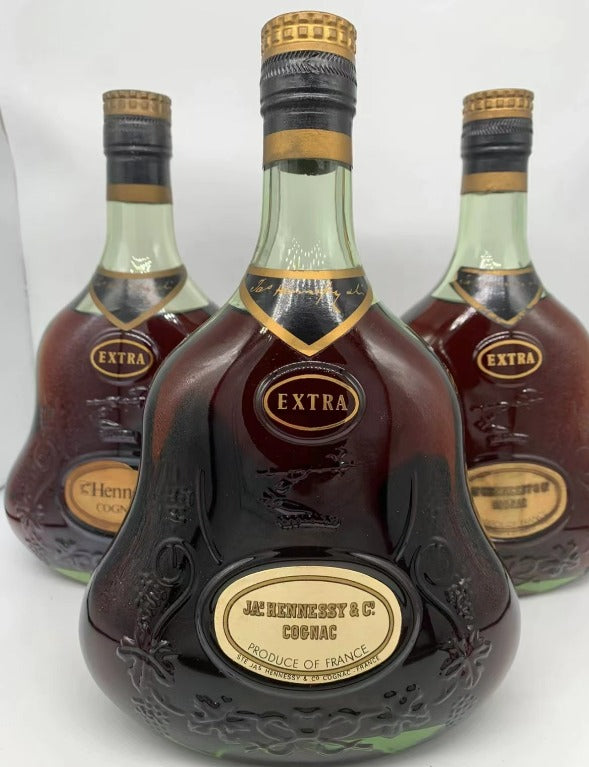
In 1870, Hennessy created Xo (Extra Old), named for its long aging process. It is made from 100 different base spirits, all of which have been aged for many years, some for up to 30 years. This became the world's first Xo and established the industry standard for Xo-grade cognac.
In 1900, Hennessy officially registered the Xo rating with the French government, hence its advertising slogan, "The origin of Xo, the essence of Xo." Other advertising slogans included, "The more you appreciate, the more you understand."
In 1948, Hennessy designed its first Hennessy Xo bottle and officially launched it to the market. The bottle's shape combines soft curves with a strong silhouette. 
Fine Old Vintage (FOV) is a French Cognac brand, named for its uniquely designed, slender, streamlined bottle shape. For many years, "Fine Old Vintage" has been the common name for this cognac in China, Hong Kong, and Taiwan, thus establishing its reputation as a renowned brand. Its distributors include Kwong Wo, Jardine Matheson (later renamed Jardine Matheson), Yee Fung, Hong Fung, and Moët Hennessy. All of its cognacs have been bottled by Hennessy , making it a classic Cognac, crafted from a selection of fifty to eighty different vintages.
Hennessy was also a former partner of Davidoff Cognac, and in the 2000s, Xo and Extra cognacs were also bottled by Hennessy .
Hennessy also owned the Monnet Cognac brand, which was also of excellent quality. 
Martell
Martell's trademark: a swallow with three mallets.
Martell champions the art of tasting with "discerning eye and exceptional understanding."
Martell established its distillery in 1715, making it the first brandy family in the Cognac region.
Martell first used the term Extra in 1819.
In 1848, Martell began using blue and white labels. "J. & F. MARTEL" on the label represents Jean Martell and Frederic Martell, members of the Martell family. The Martell coat of arms features a swallow and three mallets because the Martell cellars are located behind a tall, wrought-iron door. On the vertical iron railings, simple carved leaf patterns adorn the Martell family coat of arms, which consists of three mallets. The coat of arms pays homage to the oldest craftsmanship in Martell Cognac production. The French word for mallet is also a homonym for "Marteau" and "Martell," and the swallow represents the swallows that nest in crevices or cliffs. 
In 2015, Martell adopted the Golden Swallow logo, which is separate from the mallet family crest. The bottle still retains the three mallets, and the family shield is designed as an abstract pattern.
In 1988, Seagram, a well-known North American beverage company, acquired Martell .
In December 2001, Seagram sold Martell to Pernod Ricard. Pernod Ricard, a French spirits and wine group, was originally formed in 1975 by the Pernod and Ricard families. It acquired brands such as Martell , Chivas Regal, and Royal Salute, quickly becoming a global spirits giant with 72 production facilities worldwide and a well-established sales network.
In 1912, Martell founded Cordon Blue Cognac. Early Martell packaging featured ribbons adorning the bottles, with the "ribbon" indicating the Martell grade. "Blue Ribbon" was decorated with a blue ribbon on the bottle. With its unique taste, Cordon Blue has been regarded as a classic by many cognac connoisseurs around the world for over 110 years, and its appearance and positioning have become legendary in the cognac world. 
In 1994, Martell launched Noblige Cognac. 
Rémy Martin
The Rémy Martin brand logo features a centaur, named after the centaur god.
The trademark became known as Rémy Martin, and for this reason, the centaur constellation symbol and the Louis XIII bottle were also registered as company trademarks.
Classic advertising slogan: "Open a bottle of Rémy Martin and good things will follow."
The Rémy Martin company was founded in 1724.
In 1898, Rémy Martin created the first Fine Champagne Cognac recipe. 
1907 Rémy Martin label
The first bottle of Rémy Martin Vsop Fine Champagne cognac was produced in 1927. It was made from a blend of 55% Grande Champagne grapes and 45% Petite Champagne grapes, and this ratio is still used today. 
In 1936, Rémy Martin launched Louis XIII, with its world-renowned crystal bottle crafted by Baccarat, a leading global crystal brand, and later by the Saint-Louis glassworks. The bottle's distinctive features include 13 fine crystal teeth arranged in a teardrop shape and a unique stopper shaped like an inverted bottle. Each bottle is meticulously handcrafted through 11 processes. Its exquisite curves, beautiful patterns, and 24K gold neck make it a rare work of art, perfectly complementing the precious wine. The story of Louis XIII begins with Rémy Martin purchasing a Renaissance-era Baroque bottle discovered on a battlefield from the time of Louis XIII. The royal fleur-de-lis decoration on the bottle symbolized its former royal lineage, leading them to apply for a patent for a replica, which they named "Louis XIII." Thus, the Louis XIII bottle became the exclusive vessel for Rémy Martin's aged and finest quality cognacs, and Louis XIII became synonymous with top-quality cognac.
In 1985, Rémy Martin launched Club Cognac specifically for the Asian market, creating a powerful and complex cognac for men. The unique octagonal bottle features clean lines and sharp angles, showcasing the mature and focused temperament of a true man.
Hongkang Trading Company sincerely buys back renowned spirits brands Hennessy , Martell , and Remy Martin. We provide professional, convenient, and impartial buyback services , offering our clients the best value and satisfaction. Whether you wish to sell or buy back these high-quality spirits, we are happy to assist you, ensuring a smooth and pleasant transaction.