

宏康商行
Old Version Renminbi On-site Collection 1951 5000 Yuan Wei River Bridge | Hongkang Business
Old Version Renminbi On-site Collection 1951 5000 Yuan Wei River Bridge | Hongkang Business
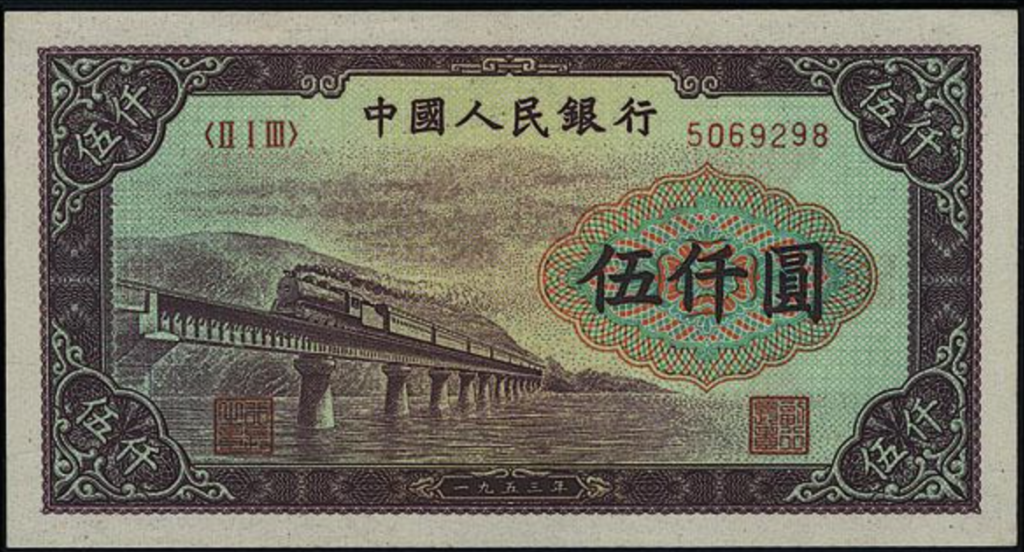
1951 Five Thousand Yuan "Weihe Bridge" Banknote: A Rare Treasure and Collectible of the First Series Renminbi
The 5000 yuan Weihe Bridge banknote, issued in 1951, is a top-tier rarity within the First Series Renminbi. Due to its early issuance, extremely short circulation period (only about 3 years), and the historical context and paper material limitations of the time, very few of these banknotes survive today. For collectors passionate about antique banknote acquisition and old coin investment, this banknote is not just a microcosm of economic history but also a highlight at auctions. Understanding its historical background and variant characteristics is key to evaluating the First Series Renminbi's recycling price.
Basic Information on the 1951 5000 Yuan Weihe Bridge Banknote
| Item | Details | Collector's Terminology/Notes |
|---|---|---|
| Issuance Date | January 20, 1951 | Late issue banknote of the First Series Renminbi |
| Withdrawal Date | May 10, 1955 | Extremely short circulation period, thorough withdrawal |
| Serial Numbers | Three-character prefix, seven-digit serial number | Numbers are mostly black |
| Front Design | Weihe Bridge and a train in motion (main colors: purplish-brown) | Symbolizes the development of infrastructure at the time |
| Back Design | Floral emblem and Uyghur script (main colors: blue, red) | Reflects the characteristic integration of multiple ethnicities |
| Main Covert Markings | Specific characters covertly marked on the left side of the front design | One of the core standards for authenticating old banknotes |
Professional Authentication: How to Distinguish Genuine from Counterfeit 1951 5000 Yuan Weihe Bridge Banknotes?
Counterfeits occasionally circulate on the market. To protect your interests, we provide transparent authentication standards for old banknotes. Below are some core inspection indicators our expert team commonly uses when acquiring old banknotes on-site:
| Authentication Point | Genuine Characteristics (1951 Original Edition) | Common Counterfeit/High-Quality Replica Characteristics |
|---|---|---|
| Paper Material | Cotton paper or thick paper with period characteristics, naturally yellowed with historical patina, slightly rough but flexible to the touch. | Paper that is too brittle or smooth, or chemically aged with an unnatural pungent odor. |
| Printing Process | Intaglio printing, with clear and sharp lines in the design, especially the train's locomotive and bridge details, strong three-dimensional effect. | Mostly modern offset printing, with blurry lines, noticeable dot patterns, lacking three-dimensionality and the tactile feel of intaglio printing. |
| Security Markings | Under magnification, tiny covert markings (such as hidden Chinese characters or geometric shapes) are visible at specific locations, with clear, unbroken strokes. | Covert markings are blurry or have stiff strokes, or are misplaced, failing to pass high-magnification inspection. |
| Ink Color | After decades of natural oxidation, the ink is subdued and not harsh, with natural transitions between purplish-brown and blue-red. | Ink colors are too vibrant or float on the paper surface, lacking the heavy feel of historical sedimentation. |
Condition Grading Standards and Market Recycling Price Reference
The purchase price of old banknotes is highly dependent on the "condition" (preservation status) of the banknote. Even for the same 1951 5000 yuan Weihe Bridge, the auction price for an uncirculated banknote can differ by tens of times compared to a common circulated one. Below are common condition grades and their impact on value:
| Condition Grade | Description of Preservation State | Estimated Impact on Market Value |
|---|---|---|
| Uncirculated (Gem/New) | Banknote is as clean as new, with sharp corners, no folds, no fading, no spots, maintaining original factory luster. | Extremely high collectible value, a top-tier rarity in the market, commanding the highest premium and top purchase price. |
| Extremely Fine (EF) | Has very slight edge wear or one to two minor soft folds, but the overall banknote remains clean and crisp. | Long-term purchase range, strong market demand, stable price with excellent preservation of value. |
| Very Fine (VF) | Has noticeable multiple folds, slight wear or rounding at the corners, possibly with minor age spots, but the design is clear. | Regular recycling price, the most common circulated condition on the market, price depends on the specific extent of damage. |
| Fine (F) and below | Banknote has severe stains, obvious tears, missing pieces (missing corners), or has been repaired, washed, or pieced together. | Basic value range, requires on-site assessment by an appraiser to determine the extent of damage and confirm the final price for damaged banknotes. |
(Note: Actual purchase prices may fluctuate with the international coin auction market. You are welcome to book our free on-site appraisal service to get the most accurate real-time quote for the day.)
Why Choose On-Site Collection for High-Value Banknote Transactions?
When conducting high-value antique banknote transactions, safety and professionalism are paramount. Our optimized on-site collection process for old Renminbi is designed for high-end collectors and owners:
-
Zero Risk Transportation: Avoid the risk of loss, damage, or moisture to precious banknotes during self-transportation or mailing.
-
Transparent On-Site Appraisal: Our experts will bring professional equipment to explain the banknote's variant and condition on the spot. The process is open and transparent, ensuring your collection's value is never underestimated.
-
Instant Cash Payment: Once the price is confirmed and both parties are satisfied, settlement is immediate. There's no need to wait for lengthy auction processes or consignment periods, ensuring funds are secure and promptly received.
-
Comprehensive Coin Appraisal: In addition to the 5000 yuan Weihe Bridge, if you also possess other First Series, Second Series Renminbi, or historical old banknotes, we can provide a comprehensive package for high-priced acquisition.
High-Price Acquisition of Old Renminbi | 【Hong Kang Collectibles】Professional On-Site Collection of 1951 5000 Yuan Weihe Bridge Banknote
Do you own a rare 1951 5000 yuan Weihe Bridge banknote? Looking for a trustworthy acquisition service? 【Hong Kang Collectibles】offers professional and high-priced old Renminbi recycling services.
Our Acquisition Service Features:
- Free On-Site Appraisal: For your convenience, we offer free on-site appraisal services. Our experts will come directly to your home or designated location to appraise your banknote.
- Accurate and Fair Price Assessment: Utilizing extensive industry experience and market knowledge, we ensure your banknote receives an accurate and fair market valuation.
- High-Price Guarantee: Based on the banknote's condition and market demand, we offer competitive high prices to ensure you receive the economic returns you deserve.
- ️Privacy and Security First: We protect client privacy and security throughout the transaction process, ensuring all transaction information remains strictly confidential.
The 1951 5000 yuan Weihe Bridge banknote is not just a form of currency; it's a cultural and historical testament to that era. If you wish to sell such a treasured collection, 【Hong Kang Collectibles】will provide professional, convenient, and reliable service.
Contact us to transform your precious banknote into high value. We look forward to serving you!
Get an instant quote ‧ Free on-site service
WhatsApp:94530784 | Free on-site service throughout Hong Kong and Macau | Cash settlement on the spot
Common FAQs
Hongkang Commercial Recycling
-

Recycling red wine series
For many years, Hong Kang Trading has been acquiring top-tier wines from...
-

Recycling whiskey
Three Steps to Complete Your Transaction: ① WhatsApp 94530784 to send photos...
-

Recycling Moutai series
Clearing out your home, handling an estate, or need quick cash? WhatsApp...
-

Recycling Brandy Series
Looking to sell? Hongkang Trading buys French Cognac, Armagnac, and brandies from...
-

Recycled Champagne Series
Looking to sell? Hong Kang Trading Co. actively purchases top-tier champagnes from...
-

Recycled Fish Maw Series
Fish maw is the dried swim bladder of marine fish, rich in...
-

Recycled Cordyceps Series
Market prices fluctuate daily, so seize the opportunity. WhatsApp 94530784 for an...
-

Recycling vinyl records
Got records to sell? Hong Kang Trading buys vinyl records (LPs): 1960s-1990s...
-

Recycling Rolex series
Rolex is one of the most stable luxury brands in terms of...
-

Recycling silver dollars/coins/commemorative banknotes series
Got items to sell? Hongkang Business accepts silver dollars, coins, and commemorative...
-

Recycled cigar series
Cuban cigars (Habanos) are the standard in the cigar world, with unified...
-

Recycling Gold Series
Hong Kang Trading has been purchasing physical gold products for many years:...


