


宏康商行
High-Price Buyback of 18th century Spanish pillar dollar coins | High-price for foreign silver coins | Hong Kang Trading
High-Price Buyback of 18th century Spanish pillar dollar coins | High-price for foreign silver coins | Hong Kang Trading
Simple AnalysisWhy Do Spanish Pillar Dollars (Benyang) Have Excellent Resale Potential?
At Hong Kong Bank, we not only buyback silver coins but also appreciate the historical journey behind each ancient coin. The Spanish portrait pillar dollar, commonly known as "Benyang" or "Buddha's Head Silver," was a hard currency circulating in China during the mid-to-late Qing Dynasty, even holding a superior status to Chinese sycee silver at the time. Below, we will provide a detailed analysis of the specifications and version differences of these silver coins to help you understand the true value of your collection.
1. Professional Specifications: How to Authenticate?
For experienced collectors and clients looking to sell their silver coins, understanding the standard physical parameters is the first step in authentication. A standard Spanish 8 Reales silver coin should meet the following data:
| Parameter | Detailed Specification Data | Remarks |
|---|---|---|
| Official Name | Real de a Ocho (8 Reales) | Commonly known as: Pillar Dollar, Buddha Silver, Benyang |
| Standard Weight | Approx. 26.86 g - 27.07 g | Weight may decrease slightly due to circulation wear; weights below 26g should be viewed with caution. |
| Silver Purity | Approx. 90.3% (0.903 Fine Silver) | High purity standard in the 18th century, with a soft, lustrous white color. |
| Coin Diameter | Approx. 39 mm - 40 mm | Edges often have anti-counterfeit floral or reeded designs. |
| Main Origin | Mexico (Mexico City), Peru (Lima), etc. | Mexico City Mint had the largest output and widest circulation. |
Expert Tip: If your silver coin's weight deviates significantly, or if it produces a sharp, piercing sound (not a sustained silver ring), it is highly likely to be a later counterfeit. Hong Kong Bank offers free spectrometer testing and professional appraisal services.
2. Version Identification: Charles III vs. Charles IV
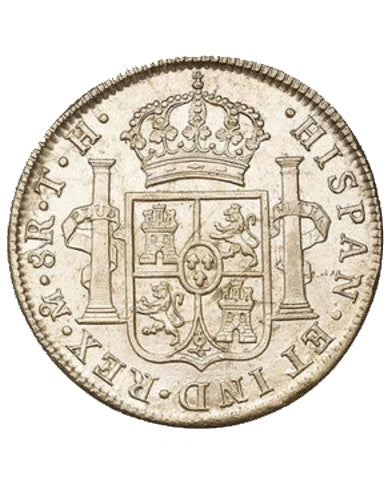
The image displayed on the page (1805) belongs to the period of Charles IV (Carolus IV), but in fact, "portrait pillar dollars" are mainly divided into two popular periods, and their buyback prices vary depending on the version and condition:
-
Charles III (Carolus III, 1759–1788):
Early portrait pillar dollars, with a side profile of Charles III on the obverse. These coins, being older, have extremely high collection value if well-preserved (with original luster). They are often referred to as "Big Buddha's Head" in the market.
-
Charles IV (Carolus IV, 1788–1808):
This is the version shown in the image on this page (e.g., 1805 edition). Although the coin bears "CAROLUS IIII," this is precisely its characteristic. This period was the heyday of "Benyang" circulation in China, and it is also the most common variety in the current silver coin buyback market.
3. What Factors Determine the buyback Price? Versions and "Chopmarks"
When evaluating the price of 18th-century Spanish silver coins, in addition to the year, the following two factors are key:
A. Mint Marks
The inscription on the reverse of the silver coin includes the mint mark, and different origins have different rarity levels:
-
M with an 'o' above (Mo): Represents the Mexico City Mint. This is the most common version, with excellent craftsmanship and the best market liquidity.
-
PTS, LM, NG, etc.: Represent mints in South America such as Potosí, Lima, and Guatemala, respectively. Some rare mint marks can fetch high-prices at international auctions.
B. Chopmarks vs. Clean Surfaces
This is a unique characteristic of silver coins circulated in China:
-
Chopmarked: When receiving silver coins during the Qing Dynasty, money changers or businesses would stamp them with a steel mark (such as "Fu," "Xing," or special symbols) to verify their fineness. Although this damages the integrity of the coin's surface, for collectors specializing in "trade silver," these chopmarks are a testament to historical circulation and possess special cultural value.
-
Clean (unchopmarked): Silver coins without stamps and with smooth surfaces. These coins are generally more popular with international collectors (those seeking NGC/PCGS graded coins), and if they have original luster, their buyback price is usually higher than that of chopmarked coins.
Hong Kong Bank specializes in buyback the renowned 18th and 19th-century Spanish-minted silver coins – the Spanish Portrait Pillar Dollar, also known as "Pillar Coin" or "Billy Silver Dollar." This silver coin holds significant value in the ancient coin collection market due to its unique historical background and exquisite design.
The obverse of the coin typically features a side profile of the Spanish monarch, showcasing the dignity and power of the ruler. The reverse features the iconic "Pillars of Hercules" as the main motif, symbolizing the Pillars of Hercules, with a banner wrapped around them inscribed with the Spanish royal motto "Plus Ultra" (meaning "Further Beyond"), signifying Spain's ambition for global expansion. Between the two pillars, a crown, coat of arms, or globe motif is often seen, all these elements together represent Spain's widespread influence in Europe, America, and other regions.
This silver coin not only possesses a rich historical background but also boasts high purity. It was once one of the global universal currencies in the 18th century, widely used in international trade. Today, such silver coins are highly sought after in the collector's market, especially well-preserved versions, which are immensely valuable.
As an antique gold and treasure buyback agency, Hong Kong Bank warmly welcomes all friends to contact us. We will arrange a clear and efficient pillar dollar buyback service for you. We promise to meticulously appraise and evaluate every pre-owned silver coin to ensure that we provide you with a fair and reasonable buyback price. We look forward to your call or visit!
If you want to quickly know if your 18th-century Spanish Portrait Pillar Dollar (foreign silver coin) is eligible for buyback, please first provide details about the reeding, toning, grading slab, and obverse. Hong Kong Bank will assess based on toning, wear, grading, and version, and will not quote the same price for coins with similar names or appearances.

Common FAQs
Hongkang Commercial Recycling
-

Buyback red wine series
For many years, Hong Kang Trading has been acquiring the world's top...
-

Buyback whiskey
Three Steps to Complete a Transaction: ① WhatsApp 94530784 to send photos...
-

Buyback Moutai series
Need to clear out a house, handle an estate, or quickly convert...
-

Buyback Brandy Series
Looking to sell? Hong Kang Trading actively buys French Cognac, Armagnac, and...
-

Champagne Buyback Series
Looking to sell? Hong Kang Trading actively purchases top-tier champagnes from the...
-

Buyback Fish Maw Series
Fish maw is the dried swim bladder of marine fish, rich in...
-

Cordyceps Buyback Series
Market prices fluctuate daily, so seize the opportunity. WhatsApp 94530784 for an...
-

Buyback vinyl records
Got records to sell? Hong Kong Kong Trade buys vinyl records (LPs):...
-

Buyback Rolex series
Rolex is one of the most stable luxury brands globally in terms...
-

Buyback silver dollars/coins/commemorative banknotes series
Do you have items to sell? Hong Kang Trading Firm buys silver...
-

cigar Buyback Series
Cuban cigars (Habanos) are the standard in the cigar world, with unified...
-

Buyback Gold Series
For years, Hong Kang Trading has been purchasing real gold products: 999.9...


